Skip to content

🎄 Delivered before Christmas — in-stock models ordered by Wed 16 December. · Free delivery ROI & NI*

Trampolines Ireland logoREBOUNDERS.FITNESSby Trampolines Ireland

Move at your own pace

Rebounder workouts for Ireland

Start small, learn the movements and build a routine that suits your confidence. These are general exercise ideas, not a personalised training or rehab programme.

Before your first fitness trampoline workout

A rebounder workout doesn't need big jumps or complicated choreography. Begin with controlled movement close to the mat, leaving yourself time to settle between exercises. The aim is to become comfortable with the moving surface before adding speed, arm movements or changes of direction. You can repeat a familiar sequence rather than trying something new every session.

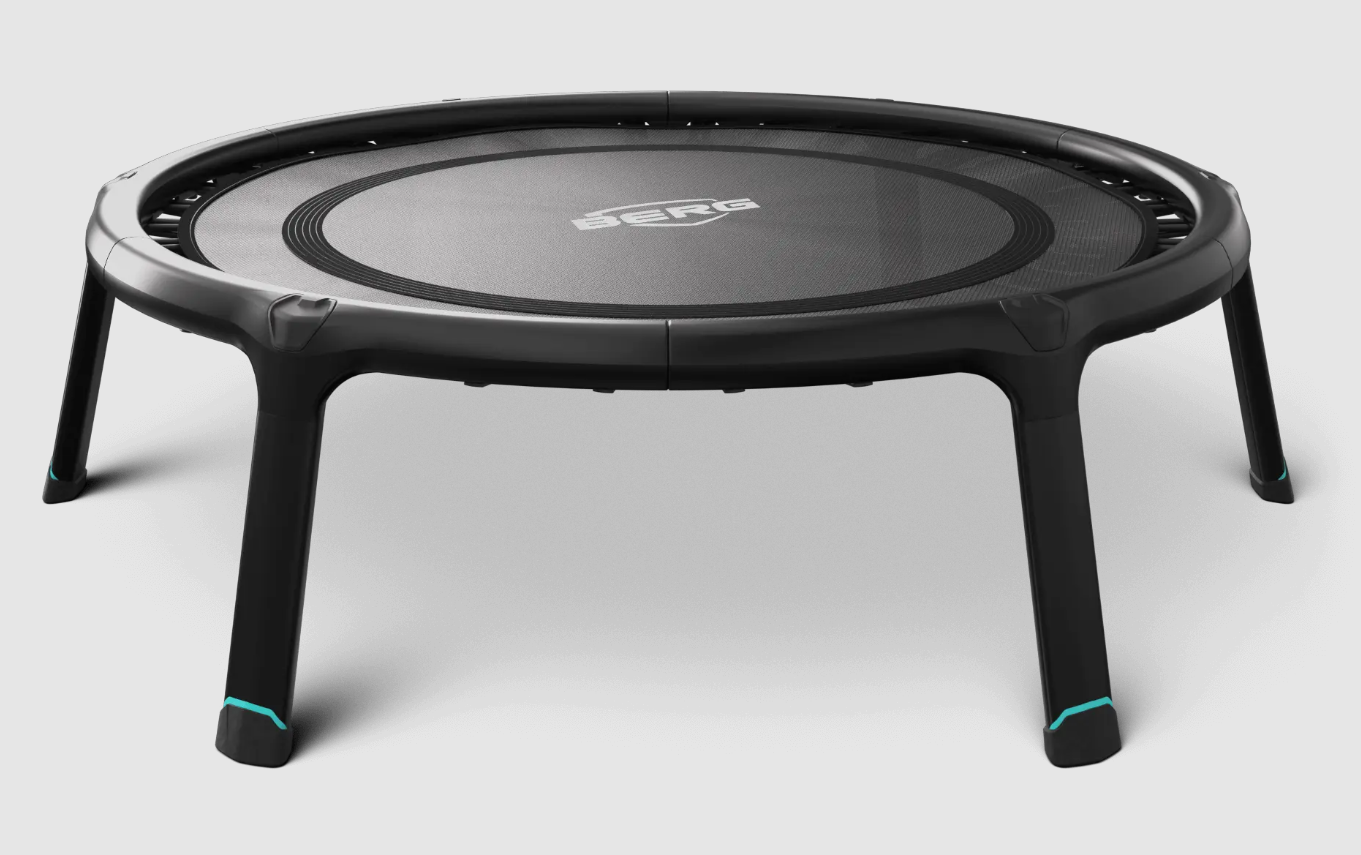
The BERG Fitness Trampoline 110 is for indoor use and users aged 14+, with a maximum user weight of 120 kg. Follow the supplied assembly and use instructions, check that the legs are secure and place it on a level, stable surface. Leave clear space around and above you, away from lights, furniture and other people. There is no safety net.

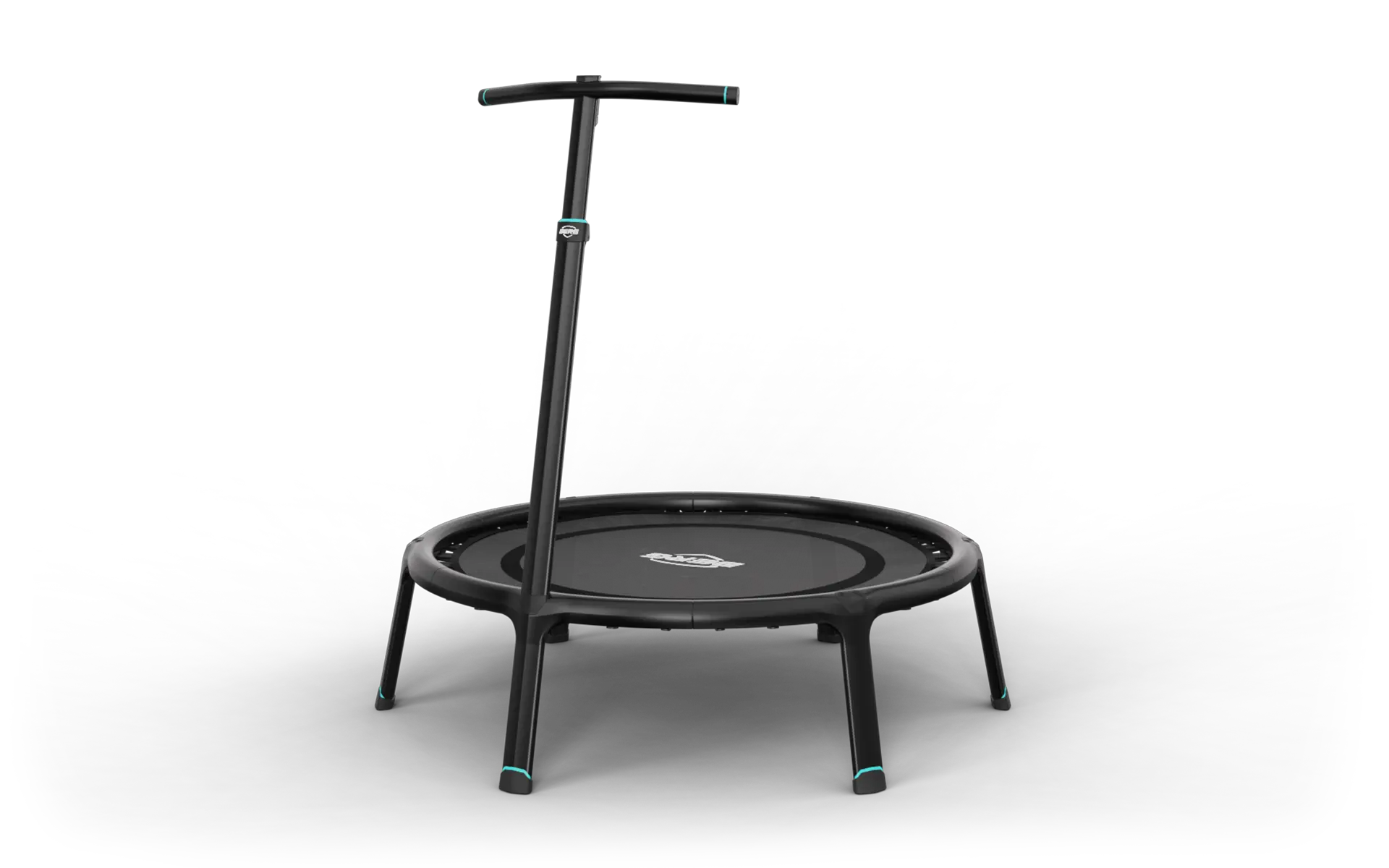
Keep the session short enough to stay in control. Rest whenever you need to, and stop if you feel pain, dizziness or unwell. These routines are suggestions, not targets to push through. If balance feels uncertain, use the stability bar model or seek guidance before attempting unsupported work.
If you have a medical condition, check with your GP or physiotherapist before starting.

Beginner rebounder routine: find your basic bounce

Stand near the centre of the mat with your feet comfortably apart and knees soft. Practise standing still first and keep your gaze forward rather than looking down. If you have the stability bar model, hold the bar lightly for support; don't hang from it or use it to pull yourself into a bigger bounce.

  1. Health bounce: gently press into the mat and let it rise beneath you, keeping your feet in contact with the surface. Think small pulses rather than jumps. 1–2 minutes.
  2. Basic bounce: once settled, try a small, even bounce with both feet. Keep it low and land softly with relaxed knees. Return to the health bounce if you start drifting.
  3. Step-ins: step one foot slightly towards the centre, bring it back, then change sides. Keep steps small and well inside the edge.
  4. Finish gently: return to a health bounce, gradually reduce the movement and come to a complete stop before getting off.

Work through the sequence slowly, pausing between movements. Repeat only while your posture and control remain comfortable — there's no need to bounce higher to make the session worthwhile. Familiarity with the surface comes first.

Intermediate rebounding: jogging and jumping jacks

Move to this sequence only when you can start, stop and change movements confidently. Begin with the beginner warm-up, then introduce one new exercise at a time. Keep the pace manageable enough that you can place your feet deliberately rather than chasing the rhythm.

  1. Jogging: alternate lifting each foot in a gentle jog near the centre. Start with low knees and small steps, upper body upright, without travelling towards the frame.
  2. Jumping jacks: move your feet slightly apart and together with a low bounce. Add arm movements only when the foot pattern feels steady.
  3. Controlled squats: stop bouncing first. Bend at your hips and knees into a shallow squat, then return to standing, at a depth you can control.
  4. Recovery: return to a basic or health bounce between exercises, and finish by gradually slowing to a stop.

Change only one thing at a time: the pace, the length of the sequence or its complexity. Adding all three together makes it harder to notice when technique slips. Leave out any movement that doesn't feel comfortable.

Low-impact rebounder routine and balance practice

For a quieter, gentler session, keep both feet close to the mat. Start with the health bounce, follow with slow step-ins and pause in a comfortable standing position. Add shallow squats without bouncing if you can do them steadily. This is an alternative session, not a test you must pass before progressing.

Single-leg balance needs particular care on a moving surface. Begin with both feet down and gradually shift some weight to one side. Only if steady, briefly lighten the other foot before setting it down again. Don't combine this with bouncing, use the stability bar or supervision where needed, and skip it if you can't stay secure.

Rebounding safety tips

  • Always bounce in the centre of the mat and stop the mat before stepping off.
  • One person at a time, and keep children and pets clear during use.
  • Wear grippy socks or bare feet as the instructions advise, and check the bands and legs regularly.
  • Drink water, rest when you need to and stop if anything hurts.

Choose your BERG rebounder

Both models use 36 elastic bands rather than metal springs and have foldable legs. Choose the standard BERG 110 for an open exercise space, or the handlebar version if support matters to your routine. Read our handlebar comparison, the Ireland buying guide or the rebounder FAQs.

BERG 110 + Stability Bar

€449

Buy at Trampolines Ireland