Start with how you'll use your rebounder
Before comparing prices, think about the movements you actually want to do. A gentle daily bounce, a jogging routine and supervised balance exercises raise different questions about support and space. Consider who will use the equipment, where it will stand during exercise and where you'll put it afterwards.
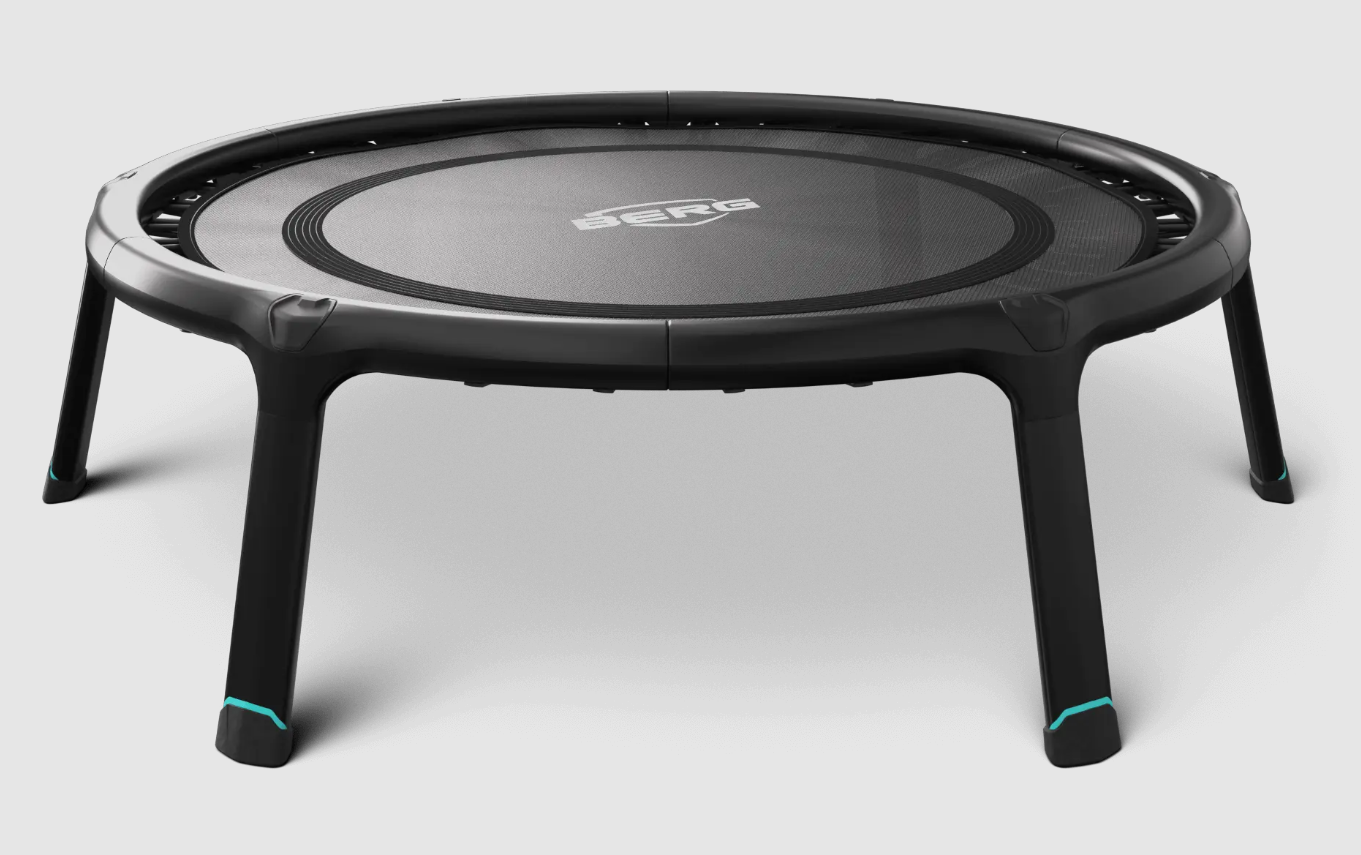
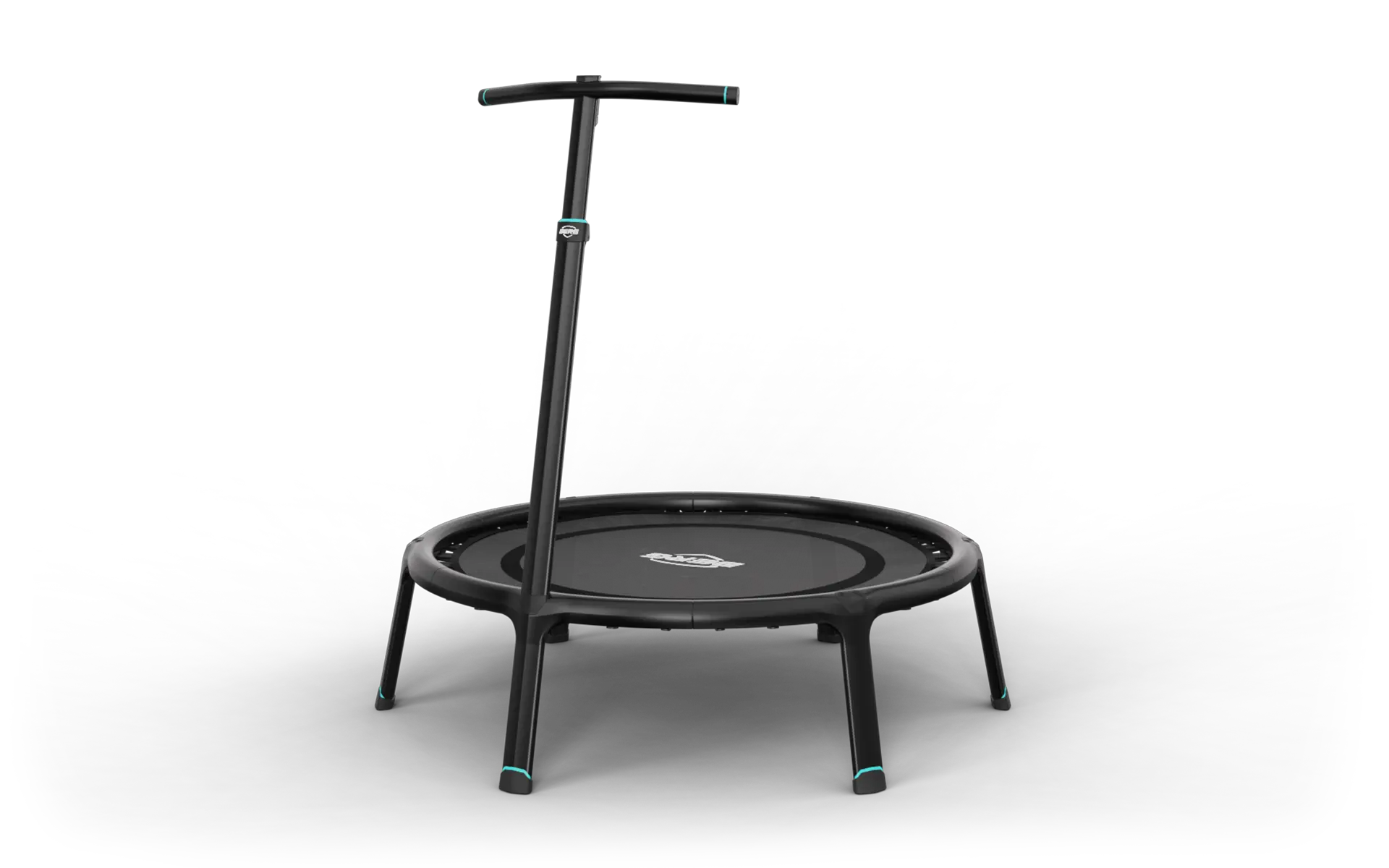
This guide focuses on the BERG Fitness Trampoline 110 and the version with a stability bar. Both are intended for indoor use, for ages 14+, with a maximum user weight of 120 kg, and neither has a safety net.
Elastic (bungee) rebounders vs metal-spring rebounders
Suspension is one of the main differences between rebounders. Elastic or bungee-style rebounders connect the mat to the frame with flexible bands; spring rebounders use metal springs. Both are established designs, so check the actual construction and intended use of the model you're considering.
The BERG 110 uses 36 elastic bands, with no metal springs. The result is a smooth, progressive bounce that's quieter and gentler on joints — a big plus for home workouts, apartments and early-morning sessions.
Rebounder size, room layout and weight limits
The BERG Fitness Trampoline 110 is round, 110 cm in diameter and 30 cm high on its legs. Mark out that footprint in your room before ordering, then add clear space around it and overhead so you can move safely.
Allow for your own height plus the bounce, avoiding ceiling lights and fans. The maximum user weight is 120 kg; the maximum test weight of 300 kg must not be treated as permission for a heavier user or for more than one person at a time.
Foldability and storage
The BERG model has a magnesium frame and aluminium legs that fold for storage — handy when your exercise space doubles as a living room or spare room. Measure the space where you plan to store it, and think about the route between storage and workout spot if you'll move it often.